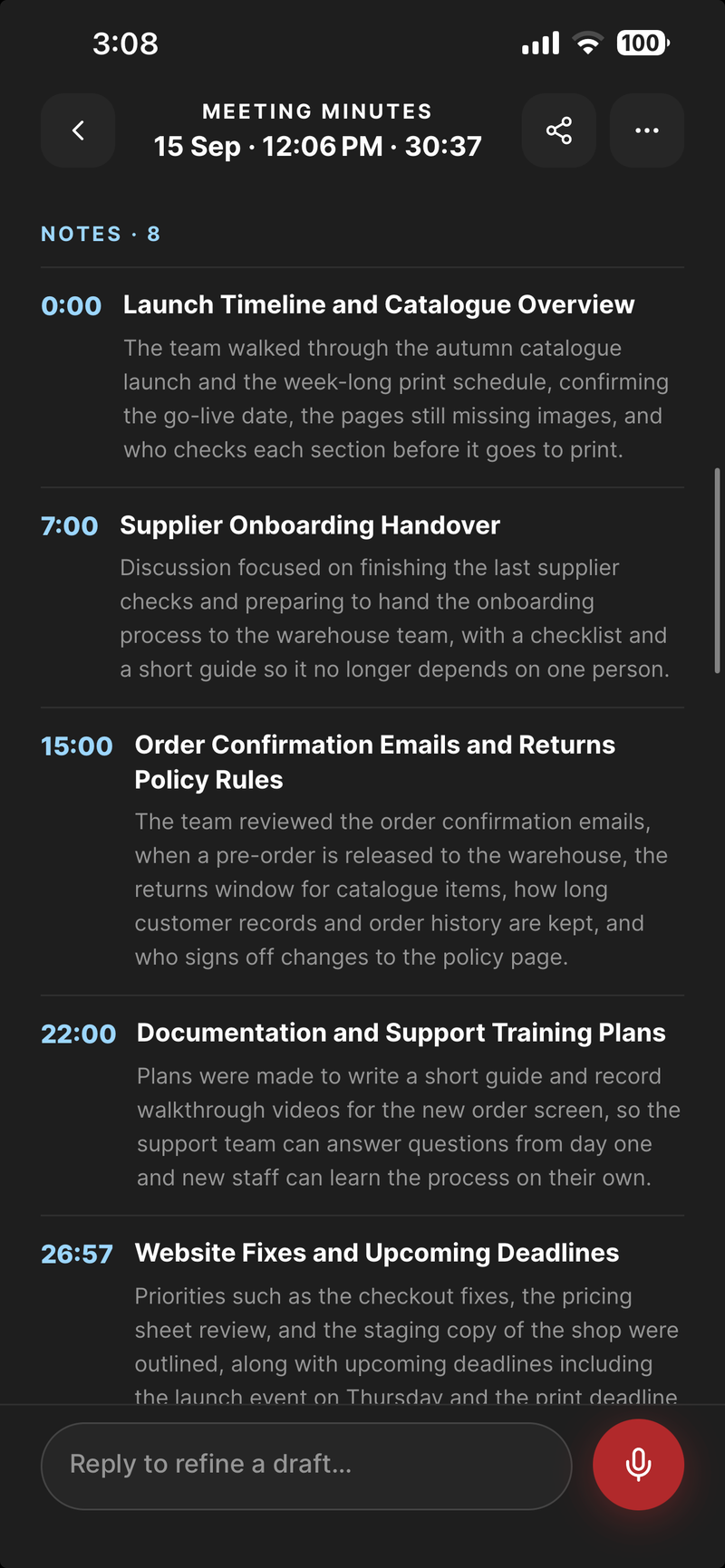
A one-on-one is the one meeting where the notes are mostly for two people and their future selves. Without notes, each one-on-one starts from nothing and the same topics come back every month. With notes, you can see what was promised, what changed and what keeps coming up. This guide covers what to write; if you would rather not type while you talk, AI meeting notes can write them from a recording, with both people’s agreement.
What to write down
Their topics, and what you agreed on each. The meeting belongs to the person who reports to you, so their topics come first in the notes as well as in the conversation.
Your topics. Kept short, and after theirs.
Feedback, in both directions. Specific enough to act on: “the incident write-up was clear; keep that format” rather than “good work lately”.
Progress on goals. Where they are against what you agreed, and what would help.
Actions. Few, with an owner and a date each. These are the most important lines in the notes, because the next one-on-one starts by reviewing them.
What to leave out
- Sensitive personal details. A health issue or a family situation may be mentioned, but it does not need to be written down. If something must be recorded for a formal process, it belongs in that process, not in running notes.
- Opinions about other people. Notes are shared between two people and may be read later by others.
- A transcript. The value is in the decisions and actions, not in every word.
Keep one running document
Use one document per relationship, newest meeting at the top, so the history is one scroll away. Both people should be able to read and add to it. Start each one-on-one by reading the last meeting’s actions out loud: done, not done, or no longer needed.
A free one-on-one meeting notes template, in Word and Markdown with a filled example, follows exactly this structure.
Recording a one-on-one
Recording is worth considering when a conversation is dense, such as a performance review or a career plan, and it has to be agreed by both people every time. Ask at the start, and do not record if either person hesitates. Recording rules also differ between countries and states; the guide to recording consent covers them.
If you do record with EchoPilot, the notes come back with the conversation’s topics as chapters, key points tied to the moment they were said, and a card for each action you agreed. The recording stays in the account of the person who made it, so share the notes you both need rather than the audio.
Making each one build on the last
The difference between good and average one-on-one notes is continuity. Two habits help:
- Tag the meetings or group them as a series, so every one-on-one with the same person sits together.
- Look back before a review. Ask across the series, “what did we agree about the payments project this quarter?”, and EchoPilot answers from those meetings with the moments cited, so you can play the original words before you rely on them. Ask is read-only; it never changes the notes.
Over a few months, the notes become the most accurate record either of you has of how the work, and the working relationship, actually went.